26 March 2026
13:00 - 14:00 PM
BMO Conference Center, Krembil Discovery Tower
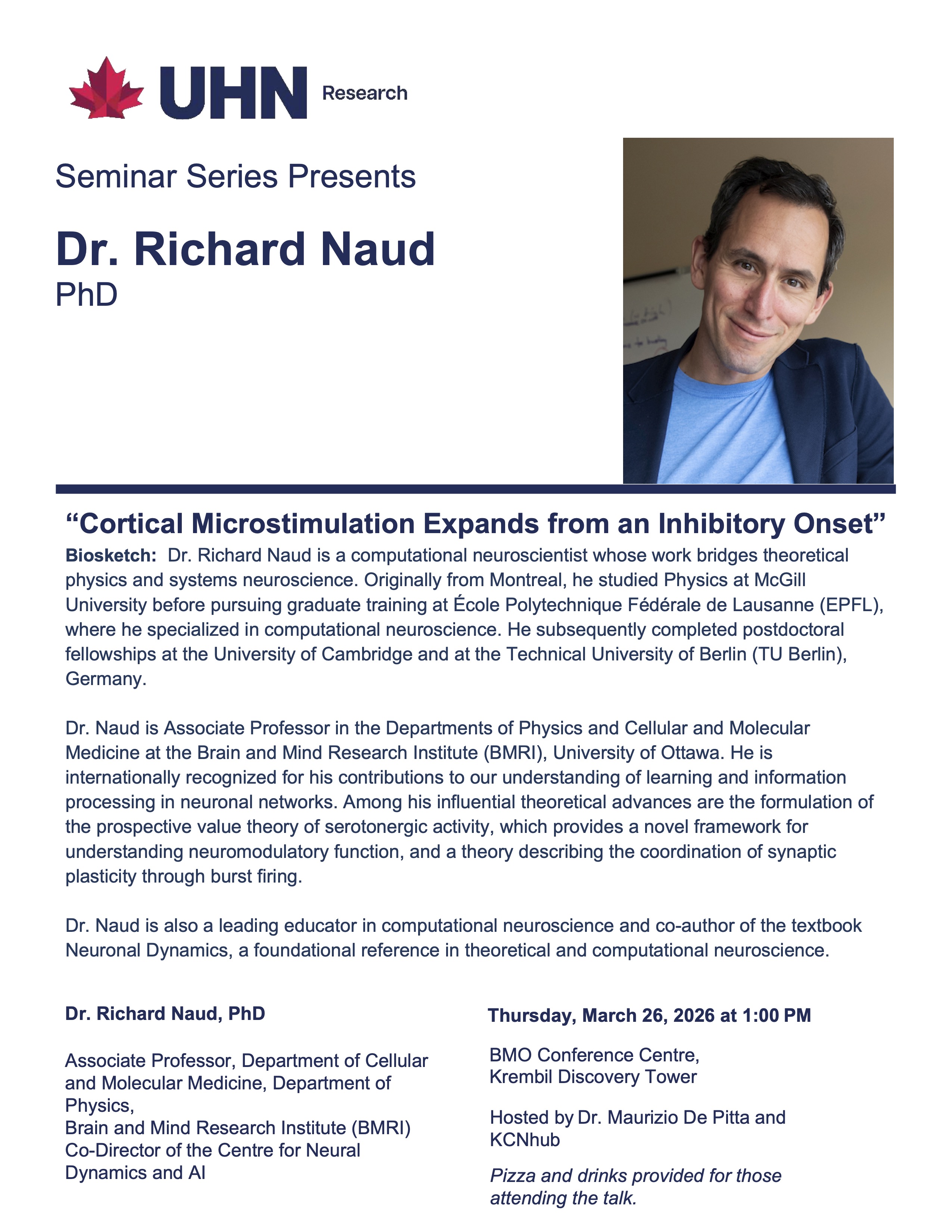
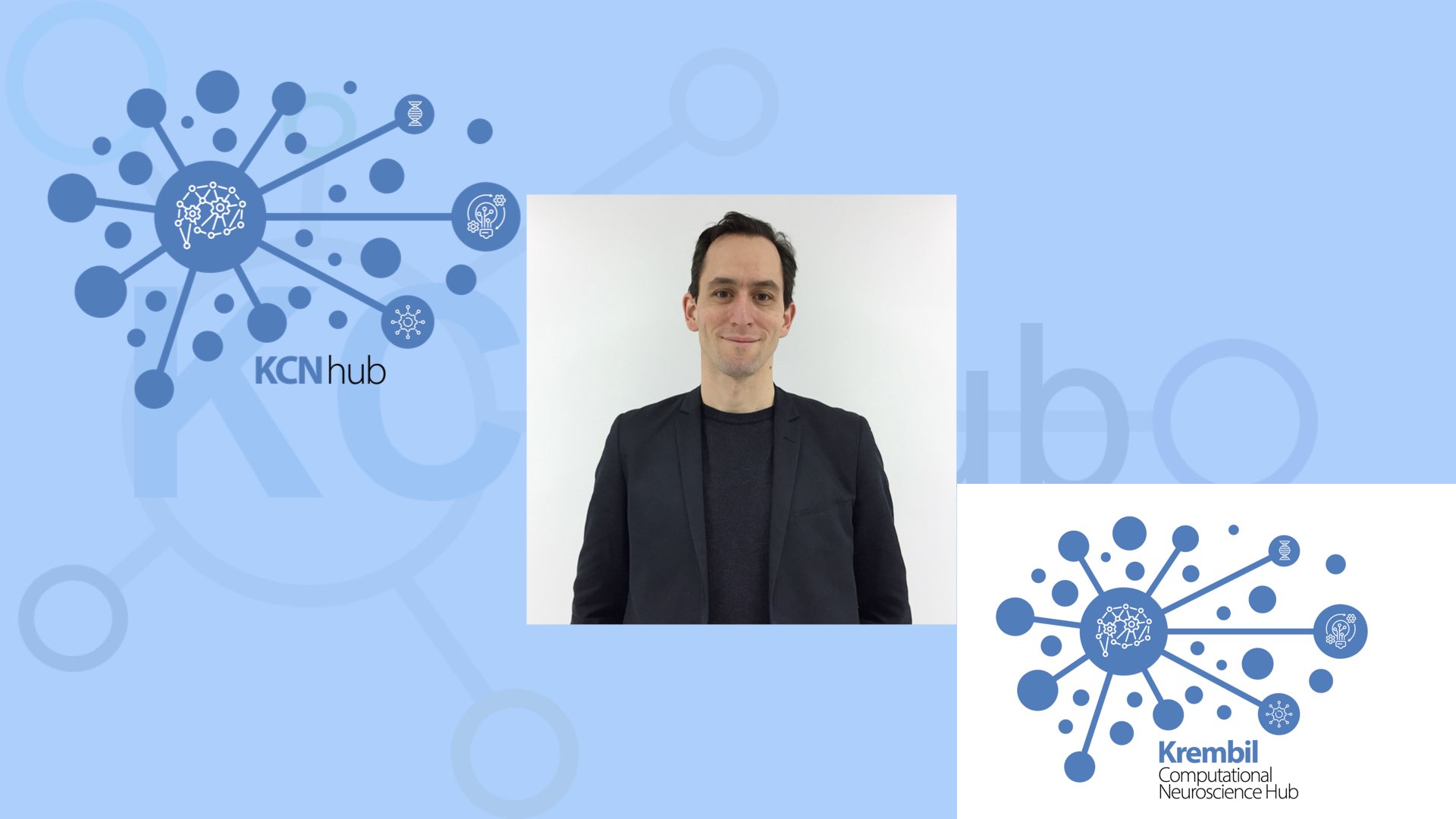
Richard Naud (Ottawa)
Cortical Microstimulation Expands from an Inhibitory Onset
Abstract
Cortical microstimulation is widely performed in the course of clinical treatments and for interrogation in neurophysiology despite the underlying biophysical mechanisms are not fully understood. Here we combine computational modelling, near-electrode patch clamp and optical axotomy to address this gap. We establish electrorheological features allowing us to measure the spread of the field along an axon. Optical axotomy revealed that microstimulation induces axial currents on the soma coming from the dendrites, but that axon remains the locus of action potential initiation. Modelling cable properties of excitation and inhibition, we predicted and verified with experiments that the direct effect of microstimulation is to trigger inhibitory cells with a higher firing rate than excitatory cells. Further, we showed that the recurrent connectivity patterns of the cortex can lead to a transient expansion from this inhibitory initial condition. Elucidating the causal chain of events involved in microstimulation is a crucial step towards precision engineering of this technique.
Biosketch
Dr. Richard Naud is a computational neuroscientist and Associate Professor at the University of Ottawa. Trained in physics at McGill University and in computational neuroscience at EPFL, he completed postdoctoral fellowships at the University of Cambridge and TU Berlin. His research examines learning and information processing in neuronal networks. He is known for influential theories on serotonergic function and burst-dependent synaptic plasticity, and is co-author of the textbook Neuronal Dynamics.
Our KCN Seminar event is jointly presented with the Krembil Seminar Series this month.
Hosted by KCN member, Maurizio De Pitta